Tanker Hit in Strait of Hormuz as Doubt Grows Over Iran's Blockade-Busting Convoy
A tanker has caught fire after being hit in the Strait of Hormuz, as doubt grows over Iran's reported plan to send a loaded convoy past the United States naval blockade of its oil exports.
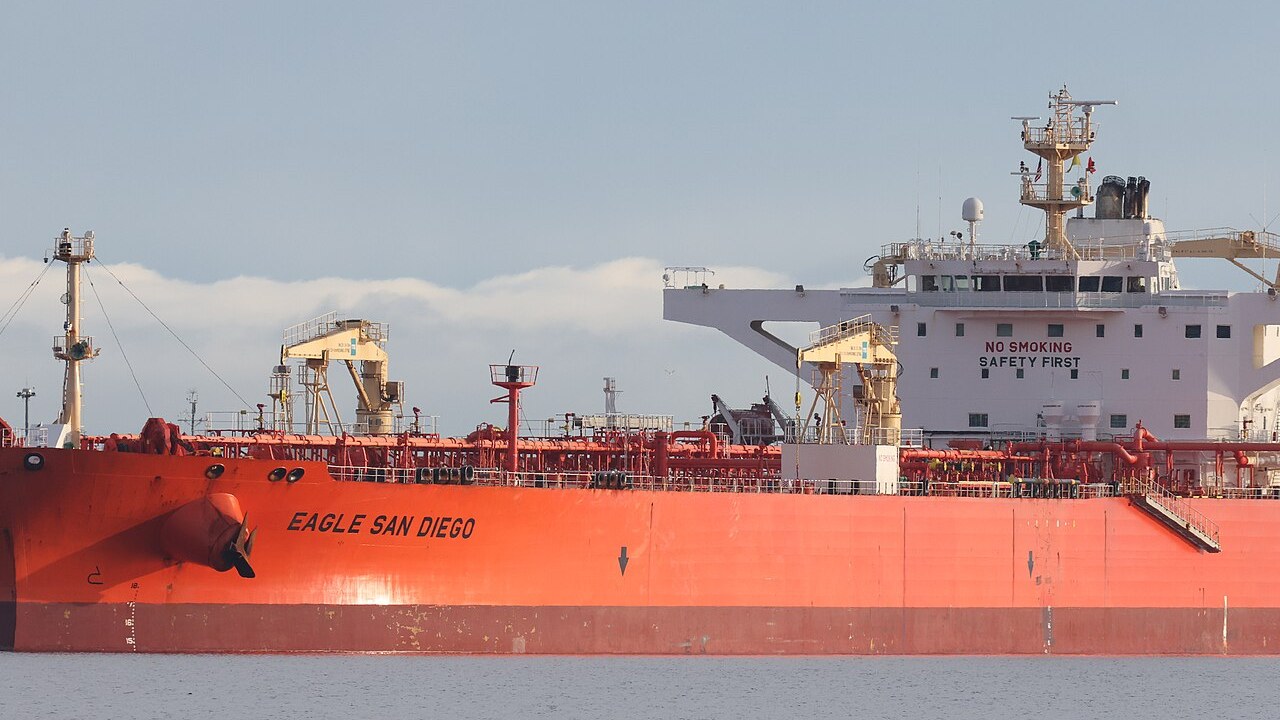
A tanker leaving the Strait of Hormuz was hit by an unknown projectile on Friday and caught fire about eight nautical miles north of the Omani port of Khasab, the United Kingdom Maritime Trade Operations agency said. No one was hurt and no environmental damage was reported. Iran's Revolutionary Guard said shortly afterwards that the tanker had hit naval mines on an unauthorised route through the strait. Iranian officials said an explosion reported on Qeshm Island was unexploded ordnance being disposed of, not a strike, after Iranian media reported a missile impact.
The incident came as doubt grew over Iran's reported plan to send a loaded tanker convoy past the blockade. Ship trackers who flagged the convoy reports have since cautioned that an imminent sailing may be overstated, and open-source imagery has not confirmed the count of more than 14 tankers at Kharg Island. The convoy proposal originated with Iranian state-affiliated media, and no Iranian government official has confirmed a departure date. Iran's foreign minister, Abbas Araghchi, said on Friday that Tehran was making every effort on oil exports and negotiations and that the blockade must be broken.
Iranian crude is moving again in small amounts. The sanctioned tanker Olym transferred about 200,000 barrels to the Hao Fan in a ship-to-ship operation south of Kharg Island with tracking switched off, according to shipping data. If that cargo clears the blockade line it would be the first seaborne Iranian crude export since mid-July. The United States widened the blockade on Wednesday to cover ship-to-ship transfers, warning that vessels receiving Iranian cargo could be stopped, boarded or seized. Kharg Island handles about 85 to 90 percent of Iran's crude exports; loadings have fallen from about two million barrels a day in March to zero in September.
Tehran has warned that any attack on its tankers would be answered with strikes on Gulf oil and gas sites, naming the United Arab Emirates, Saudi Arabia, Qatar, Bahrain, Kuwait and Oman. President Donald Trump said on Friday that Iran wanted a deal but not one acceptable to him, repeated his claim of total control over the Strait of Hormuz, and said Iran would never be allowed a nuclear weapon. The blockade began in April, was lifted briefly in June and reinstated on 14 July after talks collapsed. The United States Senate voted 51 to 48 on Thursday against a resolution limiting further military action.
Key points
- A tanker was hit by an unknown projectile north of Oman's Khasab port while leaving the Strait of Hormuz and caught fire; no one was hurt, and Iran's Guard said the vessel hit naval mines on an unauthorised route.
- Ship trackers have cautioned that reports of an imminent Iranian tanker convoy from Kharg Island may be overstated, and no Iranian official has confirmed a departure date.
- The sanctioned tanker Olym transferred about 200,000 barrels of Iranian crude to the Hao Fan in a ship-to-ship operation south of Kharg Island; if it clears the blockade it would be the first seaborne crude export since mid-July.
- Iran's foreign minister said the blockade must be broken, while President Trump said Iran wanted a deal but not one acceptable to him and repeated his claim of total control over the Strait of Hormuz.