Russian Satellites Are Helping Iran Track US Forces, Analysis Says
Russian military satellites are giving Iran the intelligence it needs to see an American attack coming and strike back with precision, according to a satellite-tracking project that has followed the spacecraft for eight months.
The project says it has followed twenty Russian spacecraft from the Kosmos-2600 series, and can track eighteen of them. The group includes the newest and most agile of Russia's military reconnaissance craft, able to collect optical pictures, radar scans and intercepted signals, including military communications and radar emissions.
Their coverage stretches from Syria, Lebanon and Israel through Jordan and Saudi Arabia to Iraq and Iran, taking in the Bab al-Mandeb strait and the Strait of Hormuz. The project says selected satellites were steered onto paths taking them right over military sites and infrastructure in the region, and were seen over targets before they were struck and again afterwards, apparently to judge the damage.
The analysis concludes that Moscow supplied the Iranian army with the targeting intelligence behind its precise strikes on American and Gulf military and civilian targets. That same stream of data, it argues, would let Tehran watch a US build-up as it happens, tracking aircraft movements, naval redeployments and surges in military communications, and keep its command system running while preparing a response before fighting starts.
It would also give Iran warning of attacks launched from far away. In June 2025, American B-2 bombers flew from the continental United States to hit Iranian nuclear sites, and Tehran now expects that such long-range strikes could be repeated against deeply buried facilities.
The picture fits other recent reporting. A deal agreed in 2024 is said to cover 90 advanced missile launchers for Iran, and Tehran's army said at the weekend that it had bought Russian Su-35 fighter jets. Intelligence reports cited in the press have described satellite imagery and weapons components reaching Iran, claims the US president has publicly dismissed. Moscow and Tehran signed a 20-year strategic partnership in January 2025, but the treaty has no mutual-defence clause, and Russia has not intervened militarily in the war.
The analysis comes in a week of cautious hope that the fighting can be wound down, with mediators working to conclude a deal after a huge military build-up raised fears of a renewed phase of the conflict. The US president has held off new attacks for now.
Key points
- A satellite-tracking project says at least 20 Russian Kosmos-2600 military satellites, 18 of them trackable, have been watching the Middle East for eight months.
- The analysis concludes Moscow supplied Iran with the targeting intelligence behind its precise strikes on US and Gulf targets.
- The same satellite coverage would let Tehran track US aircraft and naval movements and get early warning of long-range strikes.
- Moscow and Tehran signed a 20-year strategic partnership in January 2025, but it has no mutual-defence clause and Russia has not intervened militarily.
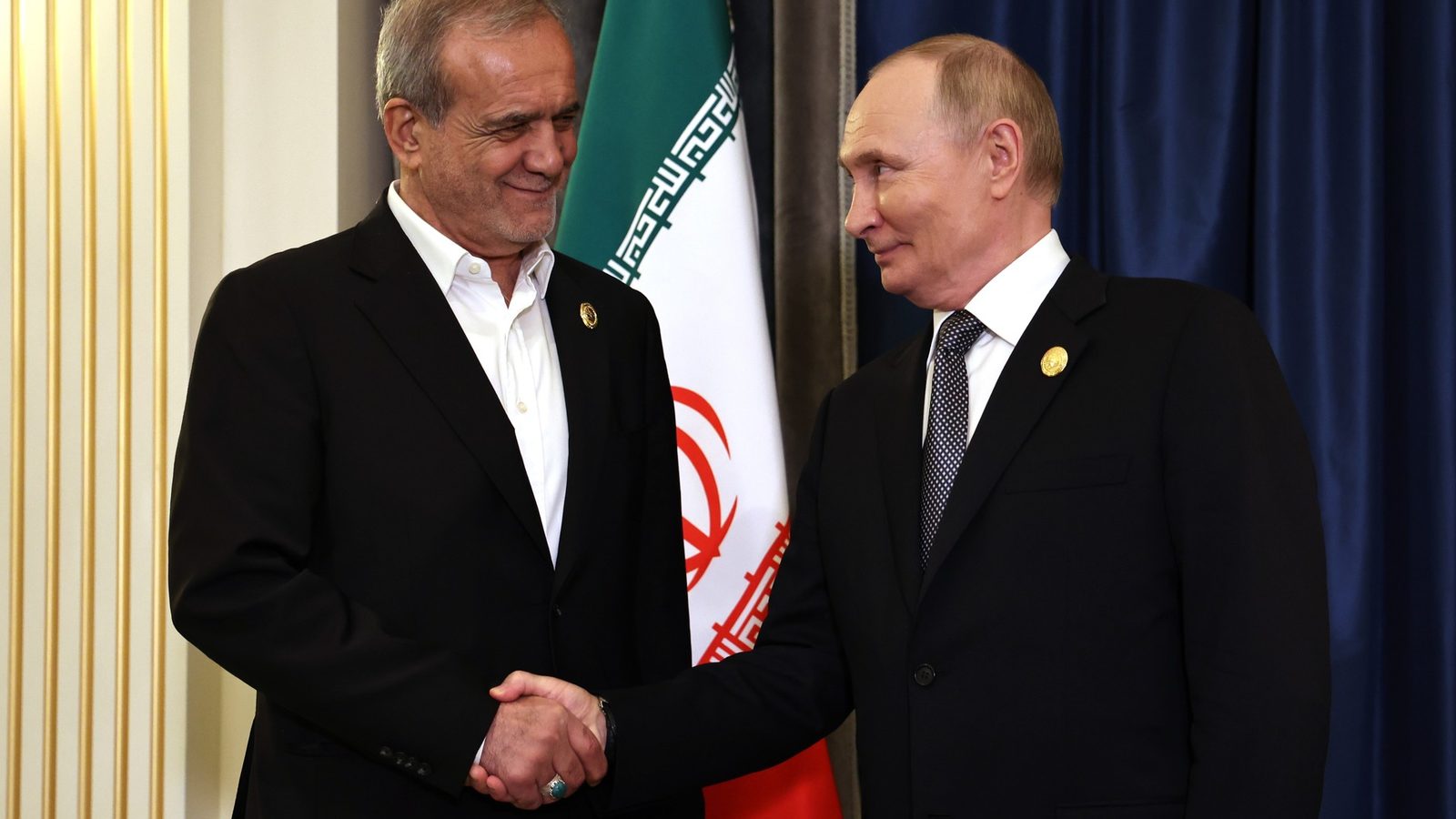
Photo: President of Russia, CC BY 4.0, via Wikimedia Commons