World Court Rules Myanmar Committed Genocide Against the Rohingya in Landmark Verdict
The United Nations' highest court has ruled that Myanmar committed genocide against the Rohingya, the first time it has held a state responsible for the crime in its 80-year history.
The International Court of Justice, sitting in The Hague, ruled by nine votes to six that Myanmar breached the 1948 Genocide Convention during its 2017 crackdown in northern Rakhine State. Its president, Yuji Iwasawa, read the judgment over nearly three hours, finding that the scale and nature of the violence went well beyond what would be needed to punish a population and showed an intent to destroy a substantial part of the Rohingya group.
The court said the evidence backs an estimate that 10,000 Rohingya were violently killed, and found that security forces carried out widespread sexual violence, extreme violence against children, and attacks on families as they fled in large numbers to Bangladesh. Rohingya villages were systematically destroyed and replaced with non-Rohingya residents, the judges said. The court also recorded that the Arakan Rohingya Salvation Army had attacked security outposts and civilians, including by burning villages, before the military campaign began.
The judges ordered Myanmar to make reparations, including allowing the safe, voluntary and dignified return of those who fled, reuniting families and returning property lost or damaged. Myanmar must also investigate and punish anyone suspected of genocide, with the amount of compensation to be decided later. The ruling is final and cannot be appealed, but the court has no way of enforcing it, and its orders will go to the UN Security Council.
The Gambia brought the case in November 2019 under the Genocide Convention, with the backing of the Organisation of Islamic Cooperation. More than 740,000 Rohingya fled to Bangladesh during the 2017 operations, and about 1.2 million now live as refugees there. It is only the fourth time since the Holocaust that an international court has found the crime of genocide proven, and the first time a state has been found responsible for it. The ruling is also being watched for its bearing on other genocide cases before the court.
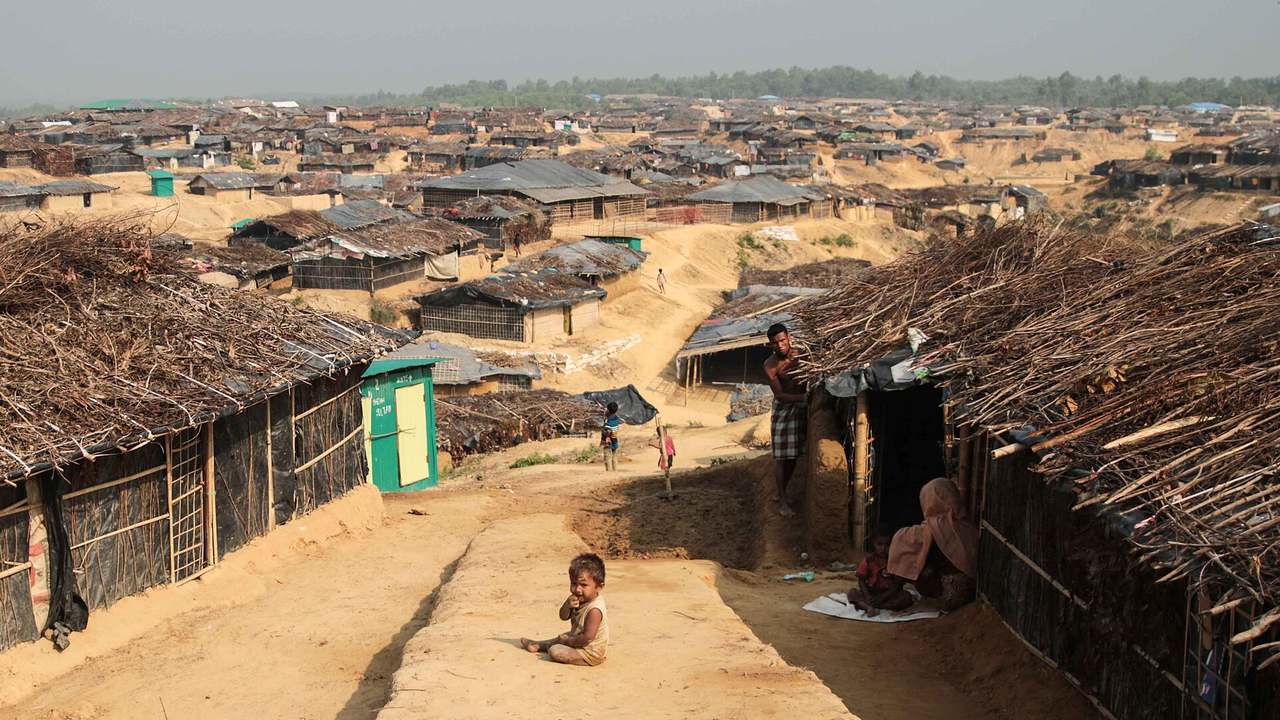
In the refugee camps of Cox's Bazar in Bangladesh, where about 1.2 million Rohingya live, crowds gathered around screens to follow the judgment, and the verdict was met with tears and prayers. Syed Qasim, 60, watching in Jamtoli camp, said the ruling brought back the memory of his brother and his family, killed in 2017, and that he no longer wanted to live as a refugee. Mohammad Rashid, 18, who watched with eight members of his family at a school in Camp 15, said at least the world now knew how many of them had been killed. The court's findings covered at least four genocidal acts, including mass killing, forced displacement, serious harm and the prevention of births. The UN human rights chief, Volker Türk, praised the courage of the victims and survivors, and Amnesty International said it hoped the ruling marked the start of a long-overdue process of accountability. More than 1.3 million Rohingya remain displaced across South and Southeast Asia.
Key points
- The ICJ ruled 9-6 that Myanmar committed genocide against the Rohingya in northern Rakhine State, the first time the court has held a state responsible for genocide; the ruling is final and binding, but the court cannot enforce it.
- Judges said the evidence backs an estimate of 10,000 Rohingya violently killed, alongside widespread sexual violence, attacks on fleeing families and the systematic destruction of villages; the court found at least four genocidal acts.
- The court ordered Myanmar to pay reparations, allow the safe and dignified return of refugees, and investigate and punish those responsible; the compensation amount will be set later and the orders go to the UN Security Council.
- In the camps of Cox's Bazar, refugees wept and prayed as the verdict was read; survivors said they hoped it would press Myanmar to recognise them and let them return, though the military remains in power and a safe return looks remote.