Voyager 1 Becomes First Human-Made Object a Full Light-Day From Earth
NASA's Voyager 1 has become the first human-made object to travel a full light-day from Earth, reaching about 16 billion miles from home nearly 50 years after launch.
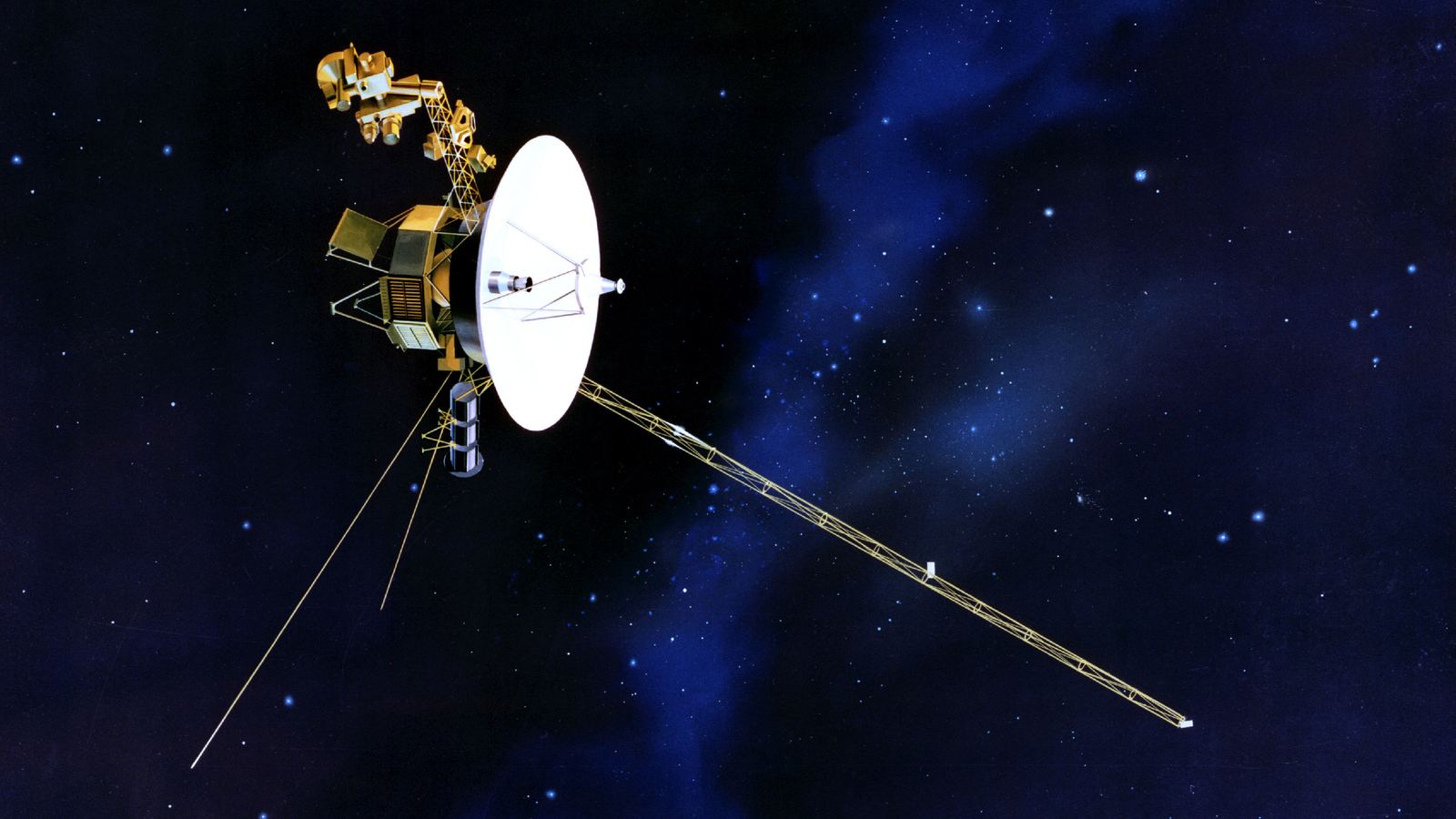
Voyager 1 passed the one-light-day mark on Wednesday, becoming the first human-made object to travel so far from home. Calculations by NASA's Jet Propulsion Laboratory put the moment at 5:16 a.m. Eastern time, when the probe was about 16.1 billion miles (25.9 billion kilometres) from Earth.
A light-day is the distance light covers in 24 hours. At that range, a radio message sent from Earth now needs a full day to reach Voyager 1, and any reply needs another day to travel back. The spacecraft is moving at about 38,000 miles per hour (61,000 kilometres per hour) through interstellar space.
Voyager 1 launched on 5 September 1977, sixteen days after its twin Voyager 2, on a mission first meant to study Jupiter and Saturn. It crossed the heliopause, the boundary of the Sun's protective bubble, in August 2012, becoming the first spacecraft to enter interstellar space. Its plutonium power source weakens a little each year, and eight of its ten original instruments have stopped working, but it still sends back measurements from a region no other mission has reached.
NASA confirmed the milestone on Wednesday and has scheduled a discussion with mission scientists for Thursday. Project manager Suzanne Dodd said reaching one light-day was an astounding feat she had never expected to see. NASA Administrator Jared Isaacman called it an extraordinary achievement for a spacecraft built with 1977 technology. Voyager 2, still travelling, is expected to reach the same distance in November 2035.
The probe carries a gold-plated copper disc, the Golden Record, carrying sounds and images of Earth. It is heading in the direction of a star known as Gliese 445, more than 17 light-years away, which it could pass within 1.7 light-years of in about 40,000 years.
Key points
- Voyager 1 reached one light-day from Earth on Wednesday at 5:16 a.m. Eastern time, the first human-made object to do so.
- The probe is about 16.1 billion miles away, so radio signals now take a full 24 hours to travel in either direction.
- Launched in 1977 to study Jupiter and Saturn, it entered interstellar space in 2012 and still sends data back.
- Its twin, Voyager 2, is expected to reach one light-day in November 2035.